
Deprecated: mb_convert_encoding(): Handling HTML entities via mbstring is deprecated; use htmlspecialchars, htmlentities, or mb_encode_numericentity/mb_decode_numericentity instead in /home/y059riaj/domains/lureschool.com/public_html/wp-content/themes/acabado-1/functions.php on line 2160
In an effort to become the best anglers’ we can, it is important to understand why a fish might be enticed to strike.
A fish will strike for one of three main reasons.
- Feeding strike: The fish is hungry
- Reaction strike: The fish is annoyed
- Territorial strike: The fish is protecting something
Each of these have their own nuances that anglers need to be aware of, below I have done my best to outline these to help you better understand how to provoke any of the above.
Why does a fish strike? : Feeding Strike
A feeding strike, also known as a hunger strike, occurs when a fish is actively feeding and responds to your lure or bait because it seems to be food. If you accurately mimic the forage that fish are actively seeking for, this might be one of the easiest times to capture fish.
One of the main reasons a fish will bite your bait and lures is a feeding strike, in which case they believe it to be food. Many newbie fishermen, however, believe that this is the only reason fish bite your lures. This is completely false, however, the other two reasons are quite a bit harder for novice anglers to use.
What lures are good for a feeding strike?
To answer that question you need to take a step back and look at the big picture. What’s the season? the water temperature? Is the water clear or muddy? Think about it when would most people say the best times of the day are to fish? Early morning and late evening. That’s because these are the times when the fish are most active, most active equals most actively feeding.
Additionally, your location will have a big impact on your choice of lure. If the fish in the water your fishing have never seen crawdads… yet you are fishing a craw you might get a reaction bite but your probably not going to get a feeding strike. Whereas, if the water you are fishing has a healthy population of crawdads and you throw a craw into that water it’s going to be more like offering free candy to children.
I’m working on an app to make this process WAY easier. You can sign up for notifications over on mailchip.
In the simplest of terms you want your lure to match the kind of bait that the fish your wanting to catch wants to eat. The easiest way to get a feeding strike is to throw some good ole live bait but that’s not what this blog is about. Below I have compiled some bait fish and good lures to use for them
Why does a fish strike? : Reaction Strike
A fish will respond aggressively in response to a perceived threat by striking at a lure or bait. Utilizing a lure that agitates fish into striking or putting them in a scenario where they can’t help but react is the primary concept behind a response strike.
How does a fish perceive threat?
Natural Bait Mimicked | Lure | Game Fish |
|---|---|---|
| Shiner | small-medium, slim light silver colored lures such as these swimbaits | largemouth bass, butterfly peacock bass, flathead catfish, lake trout, chain pickerel, longnose gar, spotted gar, tiger muskellunge |
| Minnows | Small swimbaits light in color or some crankbaits such as these power minnows | largemouth bass, smallmouth bass, spotted bass, hybrid striped bass, redeye bass, butterfly peacock bass, channel catfish, white catfish, bullhead catfish, rainbow trout, brook trout, most crappie, bluegill, most sunfish, chinook salmon, coho salmon, alligator gar, bigmouth buffalo, bowfin, chain pickerel, Florida gar, freshwater drum, lake whitefish, northern pike, saugeye, spotted gar, walleye |
| Shad | Small swimbaits, crankbaits, or spinner baits such as these in white | largemouth bass, hybrid striped bass, channel catfish, blue catfish, black bullhead, yellow bass, alligator gar, florida gar, freshwater drum, northern pike, spotted gar, sturgeon |
| Crawfish | Any larger softbait such as a rage craw | largemouth bass, smallmouth bass, spotted bass, shoal bass, redeye bass, blue catfish, flathead catfish, bowfin, sturgeon |
| Blue gill | squarebill crankbaits, swimjigs, swimbaits | largemouth bass, northern pike, flathead catfish |
| worms | Typically Soft plastic worms such as the senko worm | largemouth bass, smallmouth bass, spotted bass, striped bass, redeye bass, channel catfish, blue catfish, white catfish, bullhead, rainbow trout, brown trout, brook trout, golden trout, steelhead, most crappie, most crappie, most sunfish, rock bass, tilapia, warmouth, white bass, yellow bass, yellow perch, chinook salmon, coho salmon, pink salmon, sockeye salmon, bigmouth buffalo, freshwater drum, lake whitefish, mountain whitefish, smallmouth buffalo, walleye |
| leeches | Typically Soft plastic leeches such as the Berkley Gulp! Jumbo Leech | largemouth bass, smallmouth bass, brown bullhead, rock bass, yellow bass, yellow perch, bowfin, chain pickerel, sauger, saugeye, walleye |
| insects | insect-shaped crankbaits and soft lures. | smallmouth bass, spotted bass, shoal bass, redeye bass, rainbow trout, brook trout, cuttrout trout, tiger trout, lake trout, steelhead, most crappie, most sunfish, bluegill, rock bass, warmouth, yellow bass, yellow perch, burbot, chain pickerel, freshwater drum, grass carp, lake whitefish, mountain whitefish |
Fish, unlike humans, have heightened underwater eyesight and a 6th sense known as a lateral line.
A lateral line is a set of small pores that serve as a sensory organ for detecting vibration and movement in the water around it. The lateral line is capable of detecting objects, currents, prey and predator movements, and water pressure (depth). All fish have lateral lines of some sort, though some are more developed than others.
Using these advanced senses a fish is able to detect your lure and decide if the lure is friend, foe, or food.
What kind of “agitation” can I use to provoke a reaction strike?
Agitation is a technique that can be used to provoke a reaction strike when fishing, which is when a fish strikes a lure or bait in response to a perceived threat or disturbance. There are several different types of agitation that can be used to trigger a reaction strike:
- Sound: Some fishermen use loud noises or clanging sounds to agitate fish and trigger a reaction strike. This can be done by banging on the side of the boat, using a noisemaker, or even just splashing around in the water.
- Movement: Rapid or erratic movement can also be used to agitate fish and trigger a reaction strike. This can be done by quickly jerking the rod or by using a lure that has a lot of action in the water.
- Pressure: Applying pressure to a fish, such as by reeling in too quickly or by using a heavy weight, can also agitate the fish and trigger a reaction strike.
- Light: Using bright or flashing lights can also agitate fish and trigger a reaction strike. This can be done by using a flashlight or by using a lure with reflective or glowing features.
It is important to note that the effectiveness of these different types of agitation can vary depending on the species of fish being targeted and the specific fishing conditions. It is also important to use caution when attempting to agitate fish, as it can be dangerous to the fish and may also be illegal in some areas.
Why does a fish strike? : Territorial Strike
Fish are naturally territorial animals, and they will often defend their territory from perceived threats. When a fish perceives a lure as a threat, it may try to bite it in order to remove it from its territory. This is known as a territorial strike.
Territorial behavior is especially common in species of fish that are known for being aggressive, such as pike or largemouth bass. In these species, the fish may become territorial in order to protect their spawning grounds, feeding areas, or other resources.
It is important to note that the likelihood of a fish exhibiting territorial behavior can vary depending on the specific species of fish, the time of year, and the specific fishing conditions. Additionally, different species of fish may have different triggers for territorial behavior, and some lures may be more likely to trigger a territorial strike than others.
How can I provoke a territorial strike?
There are several techniques that fishermen can use to provoke a territorial strike:
- Use lures that mimic the appearance or behavior of small fish or other aquatic prey: Some fish, especially predatory species, may become territorial when they perceive a lure as a potential threat to their territory. Lures that mimic the appearance or behavior of small fish or other aquatic prey can be particularly effective at triggering a territorial strike.
- Fish in areas with known spawning grounds or feeding areas: Some fish, such as bass or pike, may become more territorial during spawning season or when they are feeding. Fishing in areas with known spawning grounds or feeding areas may increase the likelihood of a territorial strike.
- Use lures that make a lot of noise or have a lot of action: Some fish may become agitated by loud noises or rapid movement, and lures that make a lot of noise or have a lot of action in the water may be more likely to trigger a territorial strike.
- Fish in areas with a lot of cover or structure: Fish may be more likely to become territorial in areas with a lot of cover or structure, as these areas can provide protection and resources. Fishing in areas with a lot of cover or structure may increase the likelihood of a territorial strike.
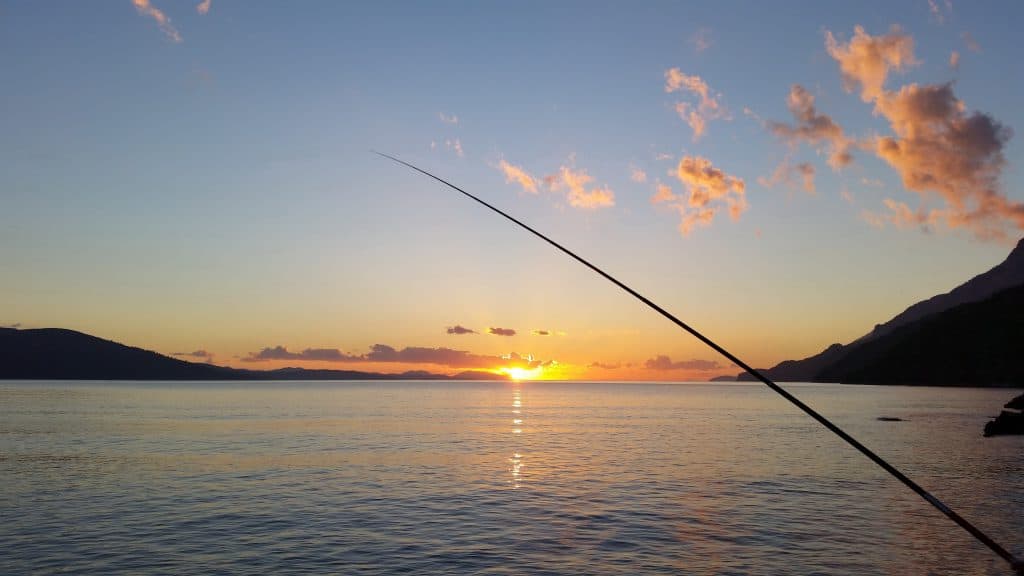
Understanding the Fish’s World
To truly master the art of angling, one must delve deep into the psyche of the fish. While we’ve explored the primary reasons fish might strike a lure or bait, it’s essential to remember that each fish species has its unique behaviors, preferences, and triggers. The more we understand these nuances, the better equipped we are to adapt our strategies and increase our chances of a successful catch.
The Ethical Angler
As we harness the knowledge of why fish strike and how to provoke them, it’s equally crucial to approach fishing with respect and ethics. Always practice catch and release when possible, handle fish with care, and be mindful of the environment. Our waters are a delicate ecosystem, and as anglers, we have a responsibility to protect and preserve them for future generations.
Final Thoughts
The world of fishing is vast and ever-evolving. With every trip to the water, we learn something new, whether it’s about the fish, the environment, or ourselves. By understanding the reasons behind a fish’s strike, we not only improve our skills but also deepen our connection with nature. So, the next time you cast your line, remember the insights shared here and embrace the journey of becoming a more informed and ethical angler.